|
|
|
|
 |
 |
|
Below are some answers to common questions about corrugated material.
|
|
 |
 |
 |
 |
|
|
|
|
Flute
|
Profile
|
Thickness
|
Comments
|
|
|
|
C
|
|
11 / 64"
|
good stacking strength good crushing resistance very common material uses: glass, furniture, dairy
|
|
|
|
B
|
|
1 / 8"
|
good puncture resistance less space consumed in warehouse uses: canned goods, displays
|
|
|
|
E
|

|
1 / 16"
|
light weight strong alternative to paper board superior printing surface excellent for custom die cut boxes! uses: displays, point of purchase boxes
|
|
|
|
|
|
|
|
|
 |
 |
|
Corrugated Flutes
The strongest structural element is the arch. Thus small paper arches between two linerboards create a very durable and lightweight packaging media. Corrugated board comes in varying degrees of durability. Fluting is the term given to the thickness, and therefore durability, of different boards. C flute is most commonly used for RSC shipping cartons.
|
|
|
|
|
|
 |
 |
|
 |
|
 |
|
|
|
Single Wall Corrugation
The most popular
|
F Flute
E Flute is 1/16" thick
C Flute is 3/32" thick
B Flute is 1/8" thick
A Flute is 1/4" thick
|
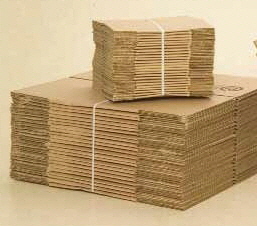
corrugated cardboard material used in boxes.
Double Wall Corrugation
Composed of a combination of B and C flutes.
Double wall corrugated board should be used when stronger boxes and extra padding are needed.
Excellent for stacking heavy items!
Triple Wall Corrugation
Composed of two layers of C flute and one layer of B flute.
Lookin' for a strong cardboard box, resistant to crush in storage and transit? Then this is your board!!
|
|
|